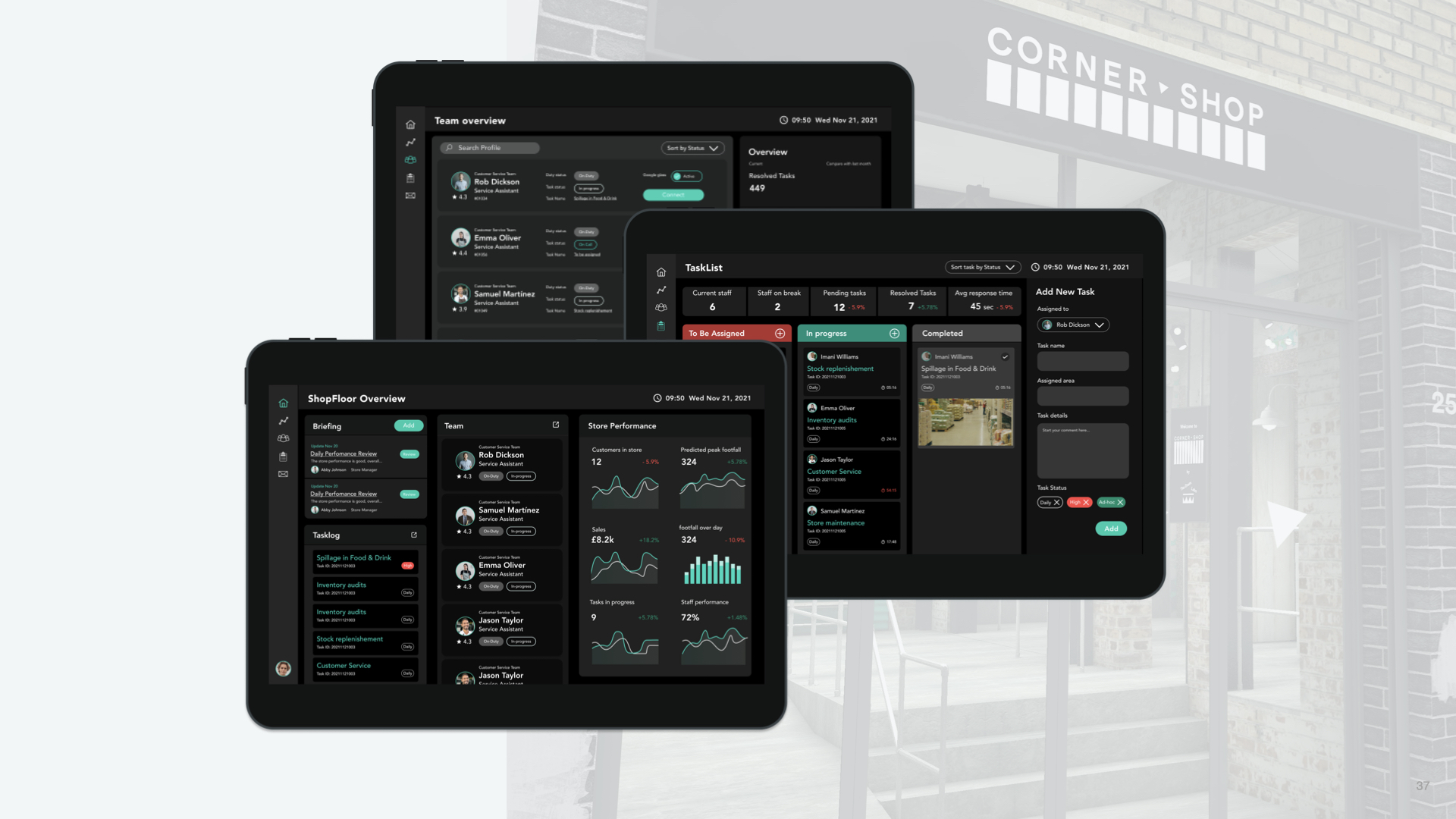
The Problem
Retailers are under pressure to deliver experiences that move smoothly between physical stores and digital channels. In reality, customer-facing apps and staff systems sit in separate silos — leaving shoppers with disjointed journeys and store teams without the tools to keep up.
The challenge: How might we connect customer experience and store operations into one omnichannel system that serves both shoppers and staff?
Impact
One journey
Connected the in-store and digital experience so customers move between channels without losing context.
Two surfaces
A customer app and a staff operations dashboard, designed in parallel so the front of house and back of house stay in sync.
Viable roadmap
A speculative concept turned into a credible business case for retail innovation, ready to take into stakeholder conversations.
Together, the work delivered an end-to-end omnichannel blueprint — proof that speculative design can become a roadmap retailers can actually act on.
My Role
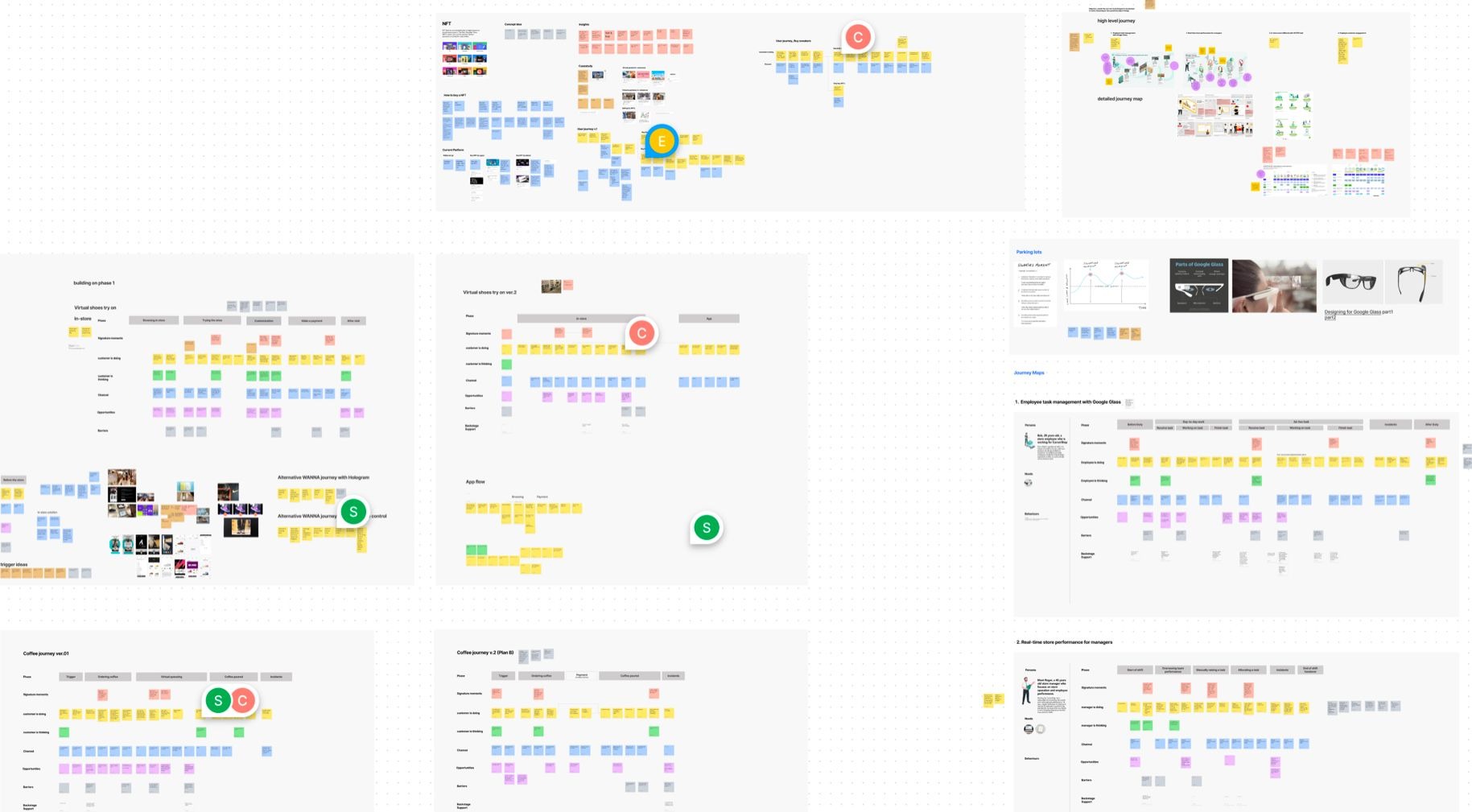
- Developed the omnichannel concept through journey maps and service blueprints linking customer moments to staff tasks
- Designed and iterated the customer app and staff dashboard in parallel, with UX rounds driven by research and testing
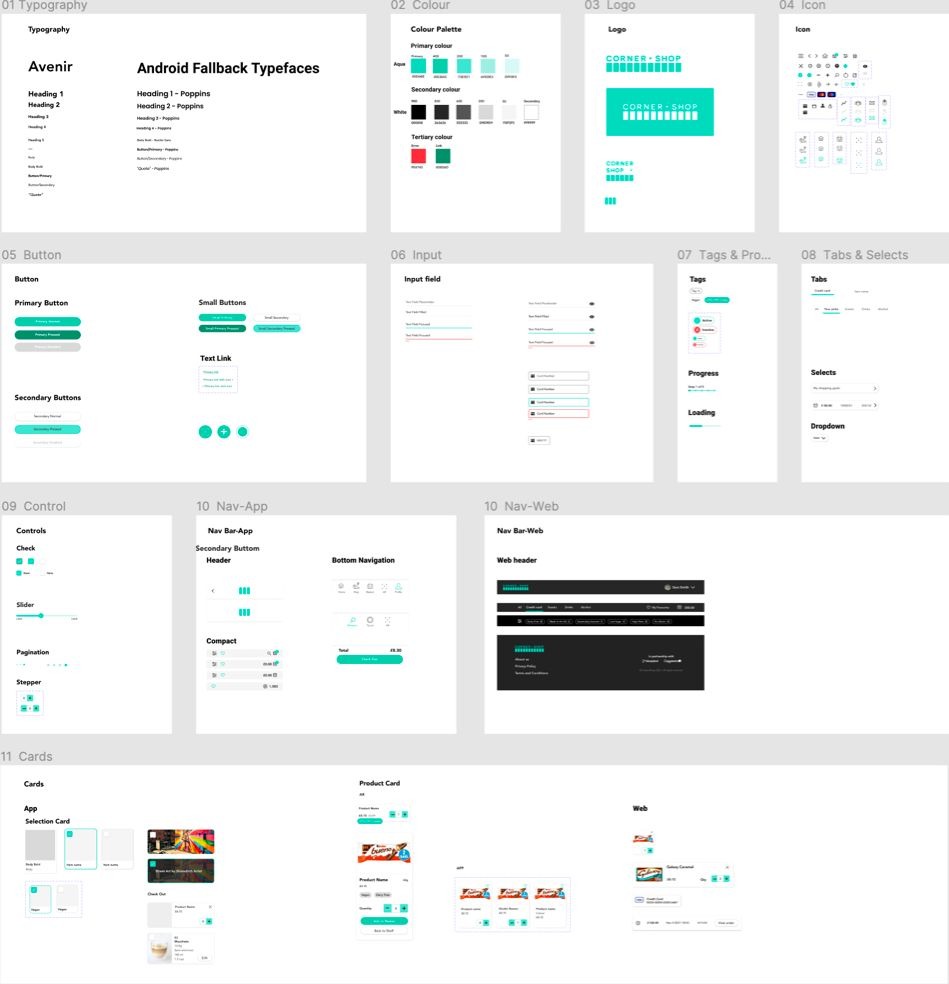
- Built the design system that carried the concept through to developer handover
- Helped frame the business case that took a speculative vision into stakeholder conversations
Research
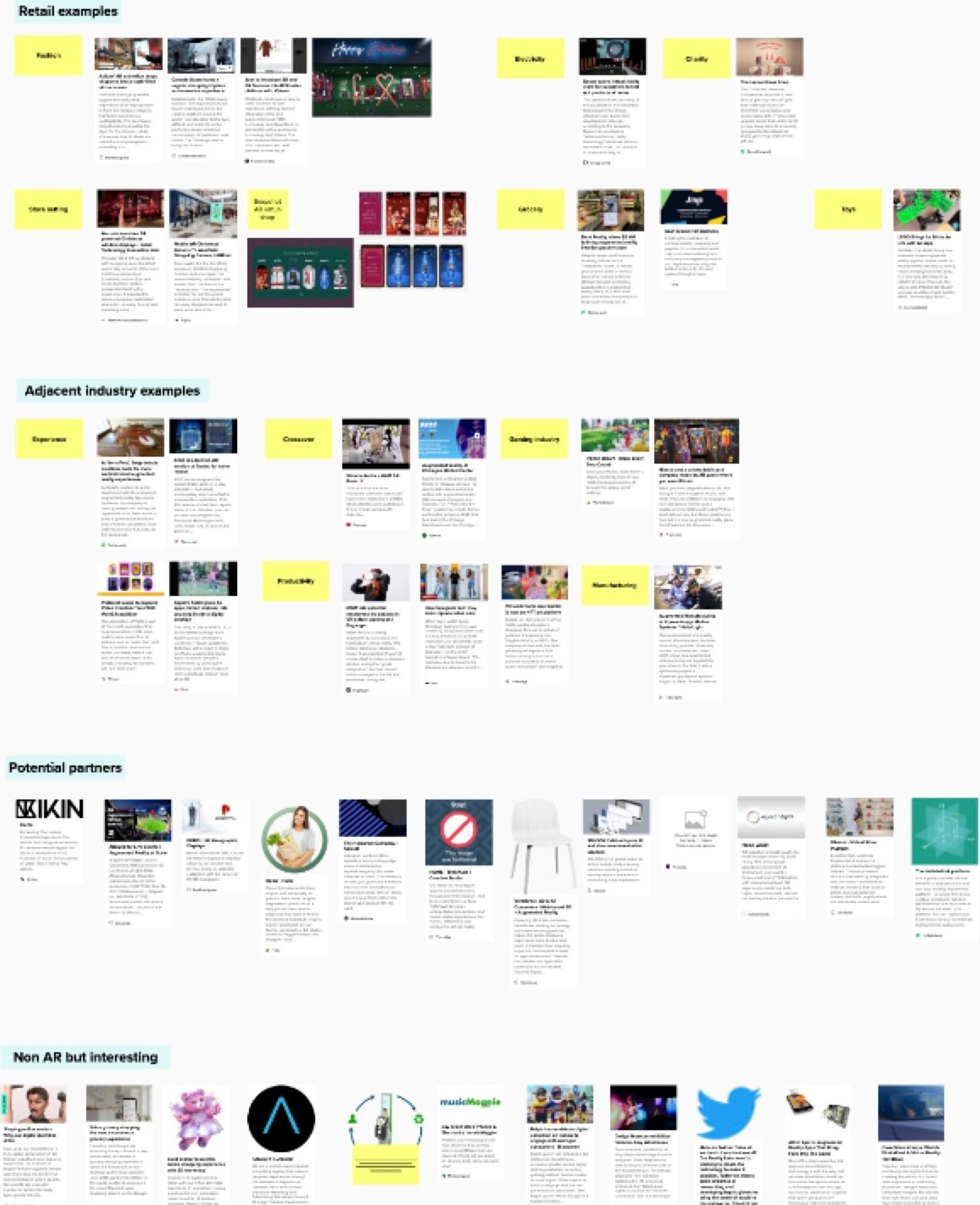
Before designing, we looked outward — studying emerging retail tech and mapping how customer expectations have shifted across channels.
Process
The project combined speculative design thinking with practical delivery — balancing ambition with feasibility, integrating complex touchpoints across channels, and testing hypotheses through alpha-phase prototypes.
01Research
Retail tech + customer behaviour scan
02Journey map
Speculative future-state flows
03Design
App + dashboard, built in parallel
04Systemise
Design system for dev handoff
Outcome
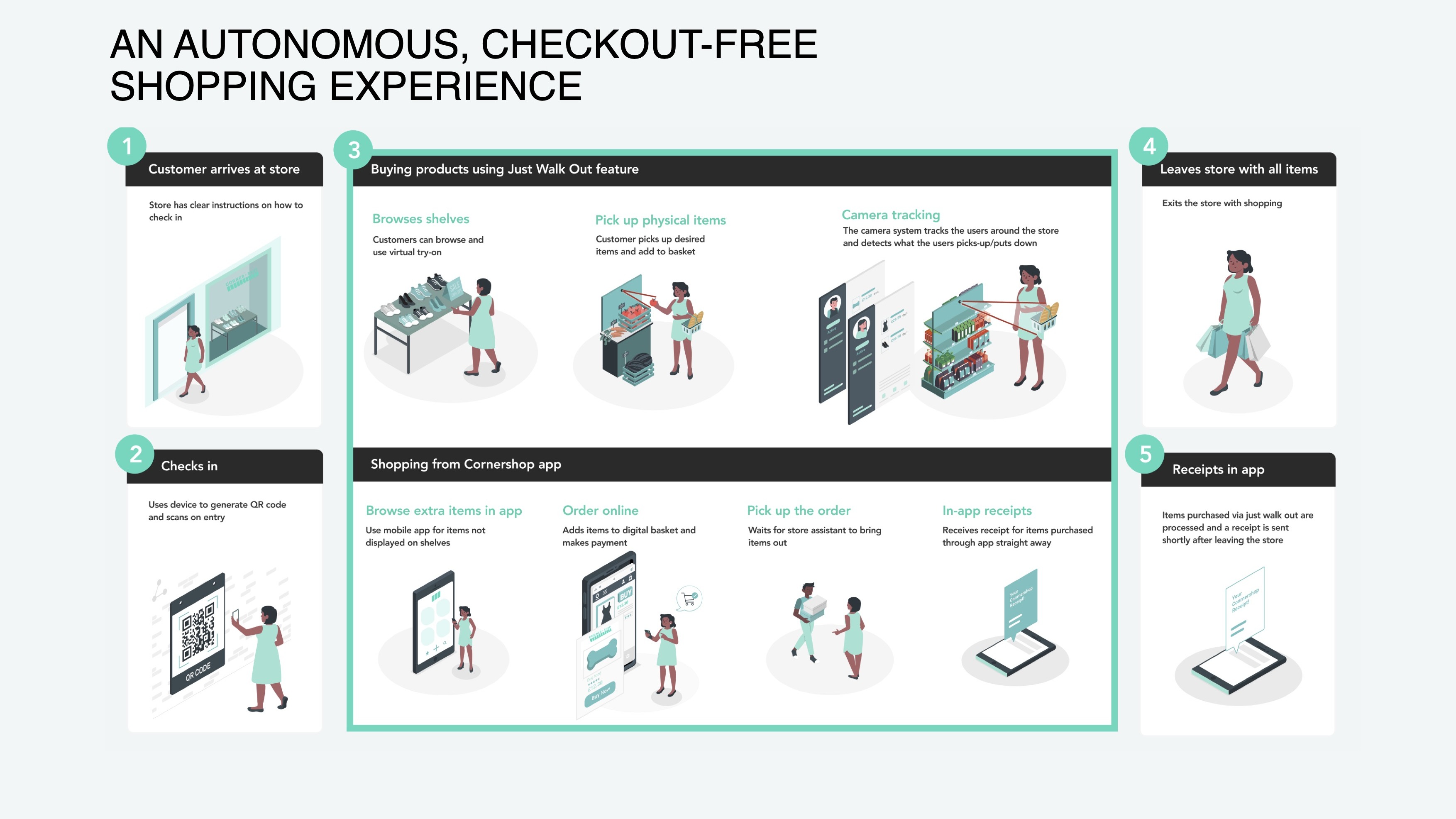
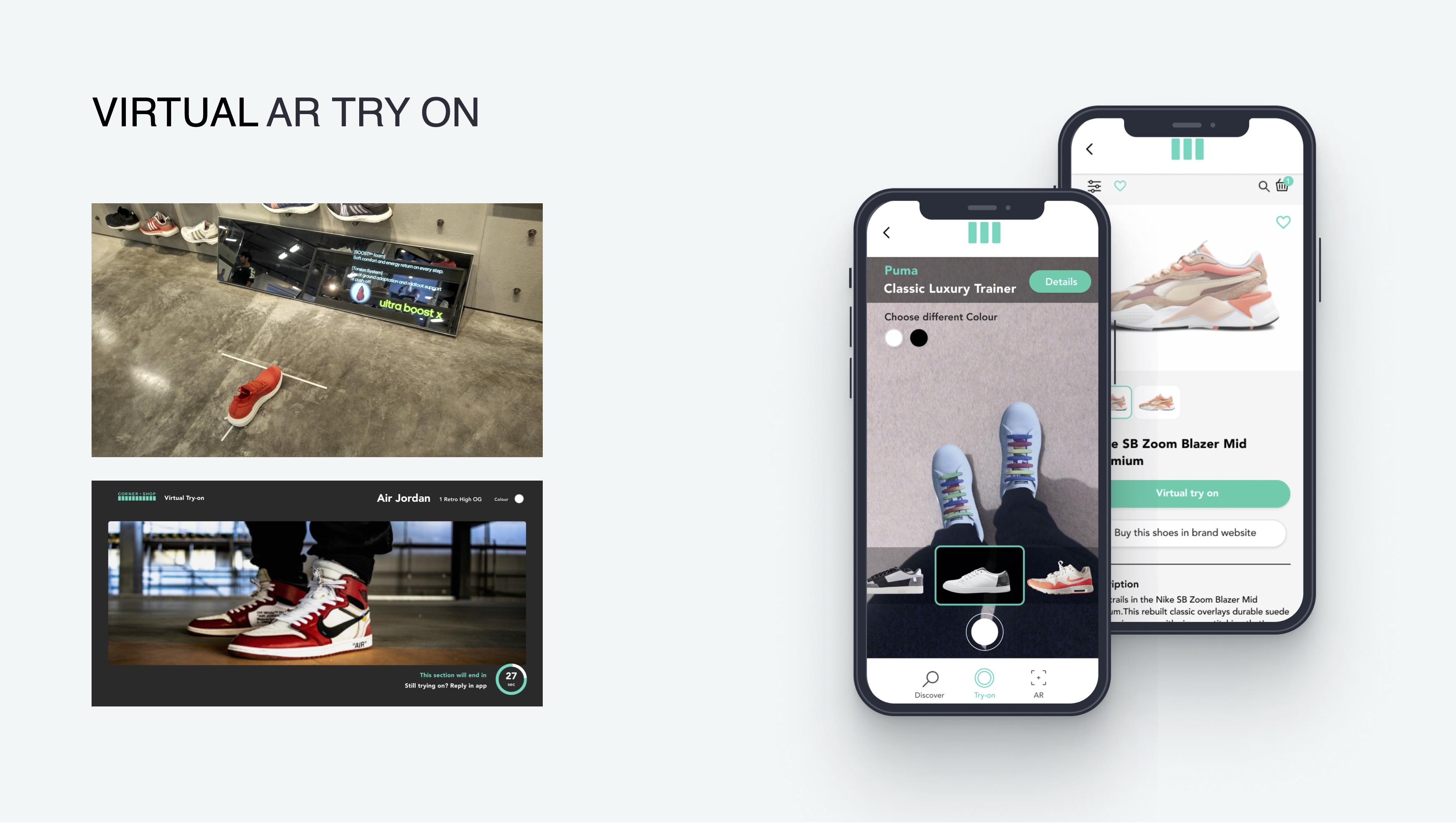
The project delivered an omnichannel experience that connects digital and physical retail — autonomous shopping journeys, AR product discovery, staff operations, and reimagined in-store touchpoints.
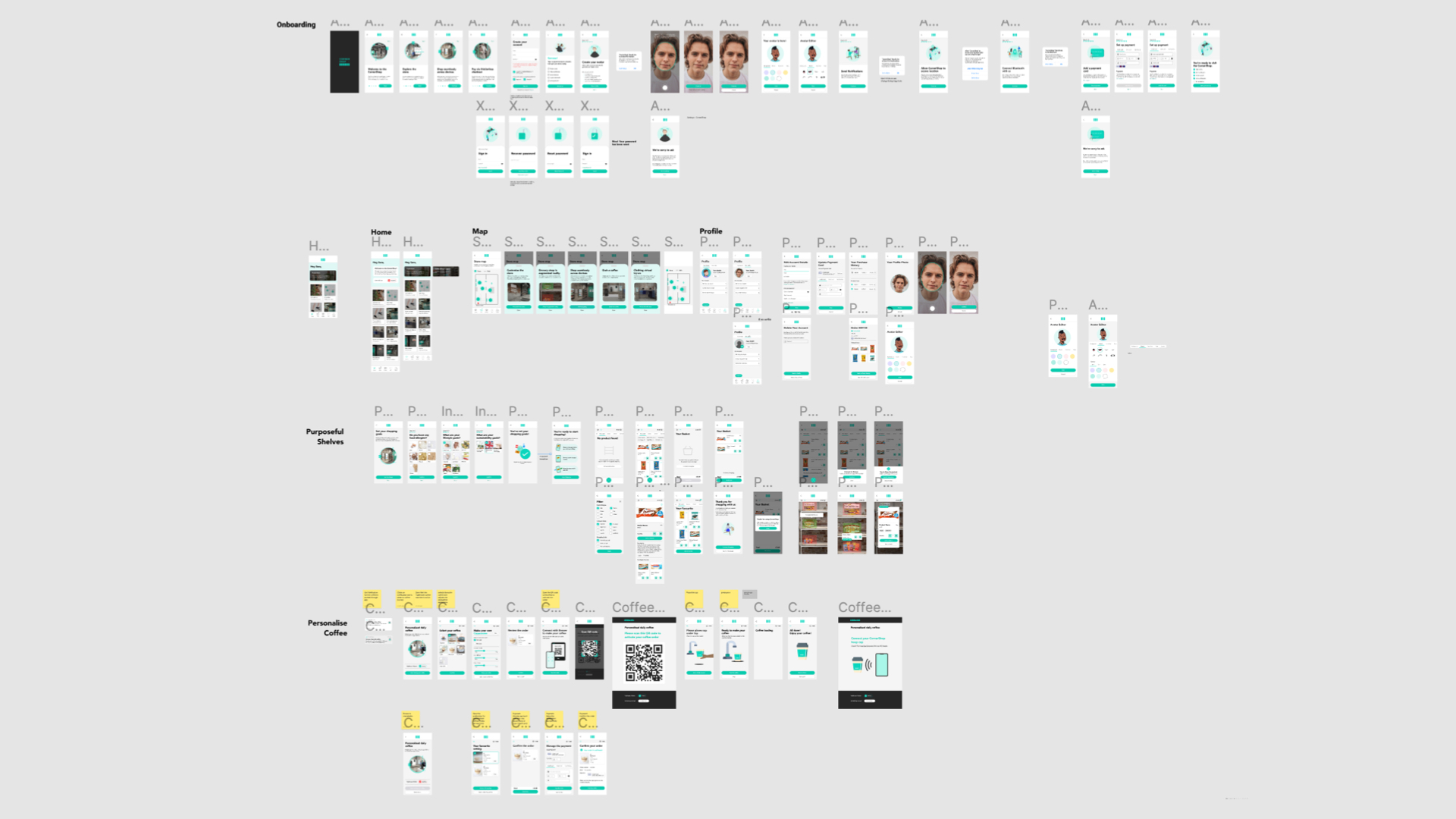
Customer experience
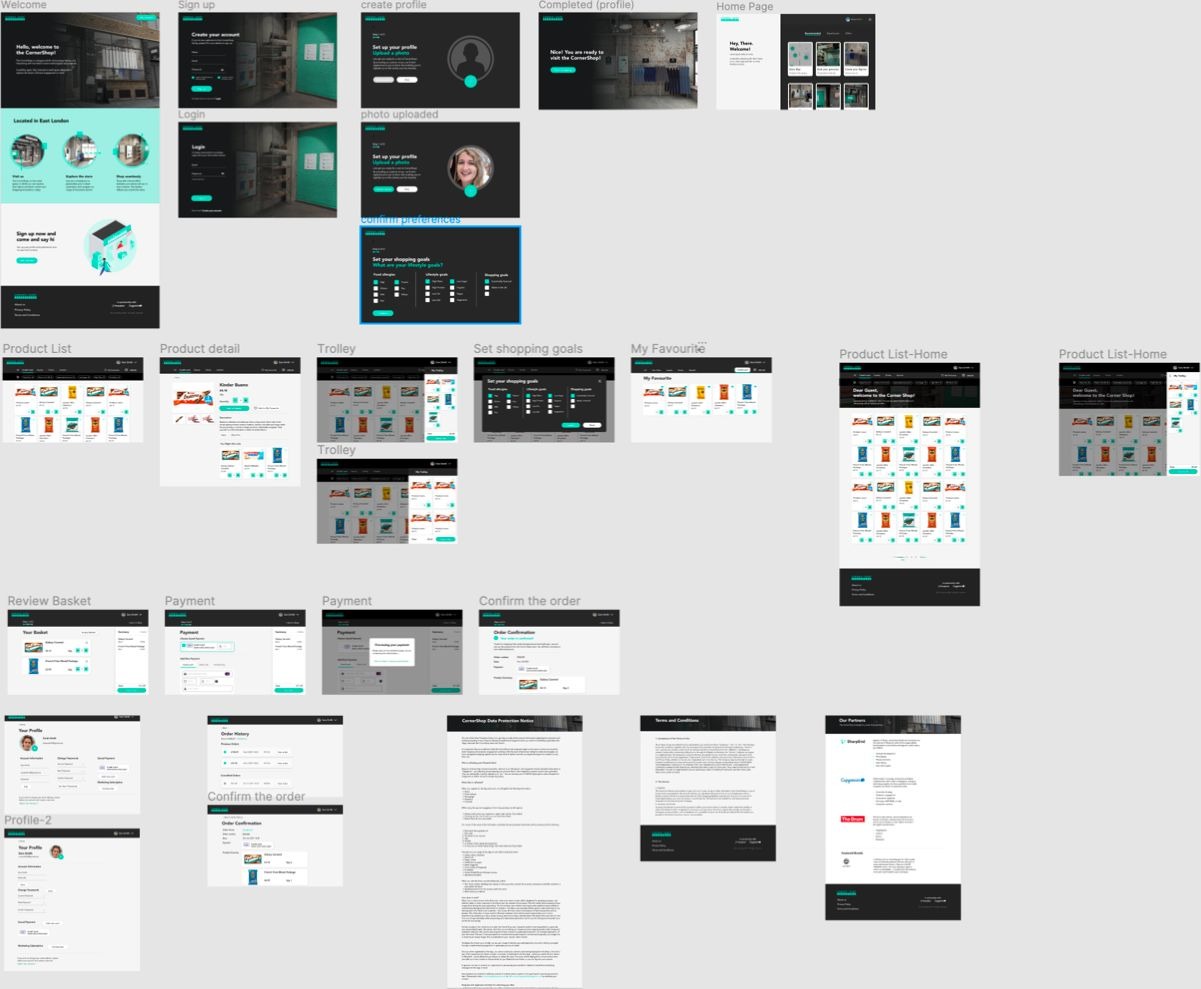
One identity across app, web, and store — shoppers move between channels without losing their basket, their preferences, or their place.
Staff operations
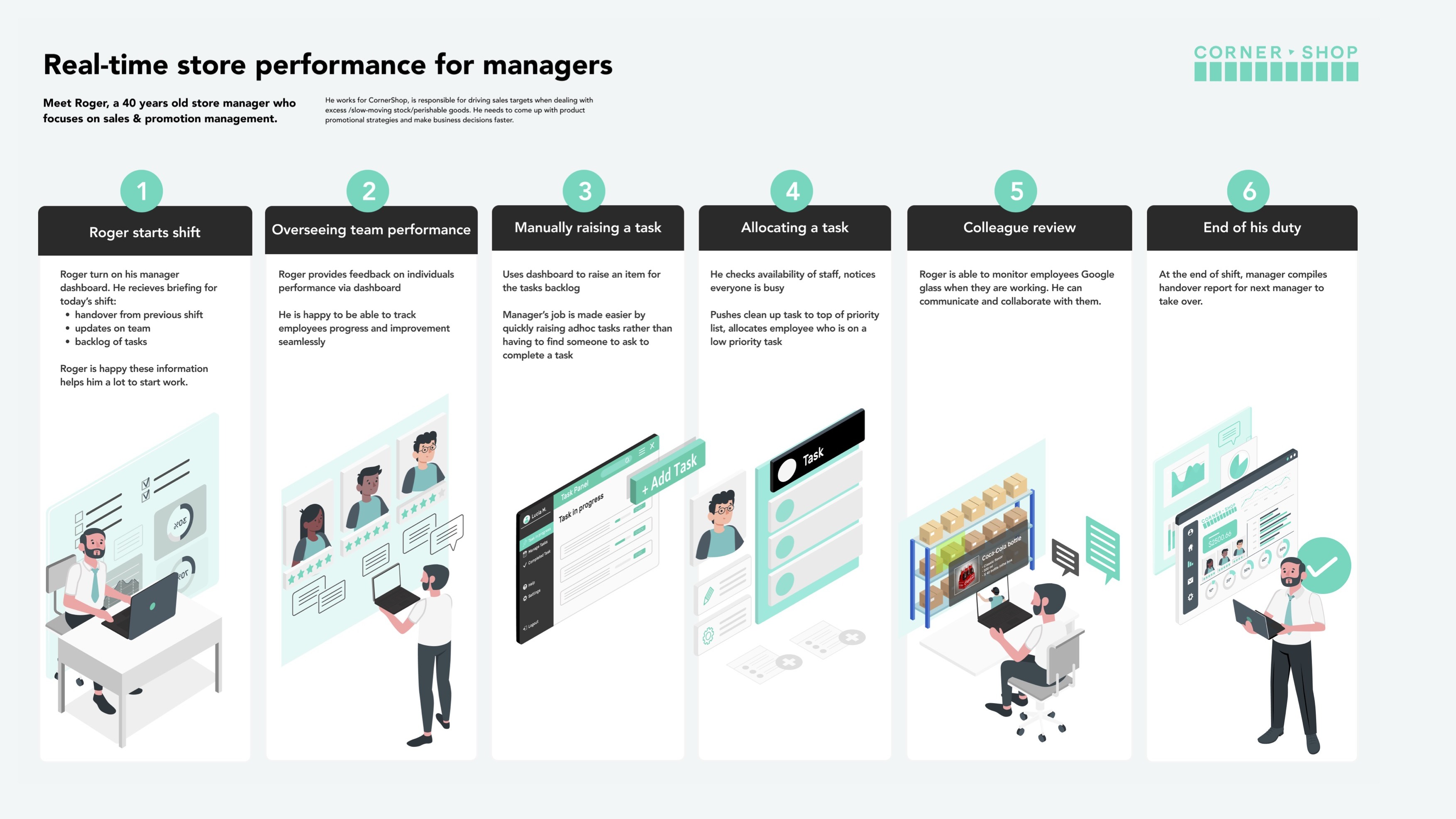
The same system, seen from behind the counter — designed in parallel with the customer app so the front of house never outpaces the back.
Key Learnings
- Adapting tech-led processes to UX — Working within a technology-first environment meant advocating consistently for user-centred approaches
- Holistic thinking — True omni-channel design requires considering every touchpoint — digital, physical, and the transitions between them
- Cross-device consistency — Maintaining experience quality across phones, tablets, and in-store displays required robust design system thinking